


Dornier DO 17
| Role | Light bomber used as anti-shipping attack aircraft used as a strategic bomber used as a night fighter used as glider tug used as Reconnaissance aircraft |
|---|---|
| Manufacturer | Dornier Flugzeugwerke |
| First flight | 23 November 1934[1] |
| Introduced | 1937 |
| Retired | 15 September 1952 (Finnish Air Force)[2] |
| Primary users | Luftwaffe Royal Yugoslav Air Force Finnish Air Force Spanish Air Force Bulgarian Air Force |
| Number built | 2,139[3] |
| Variants | Dornier Do 215 |
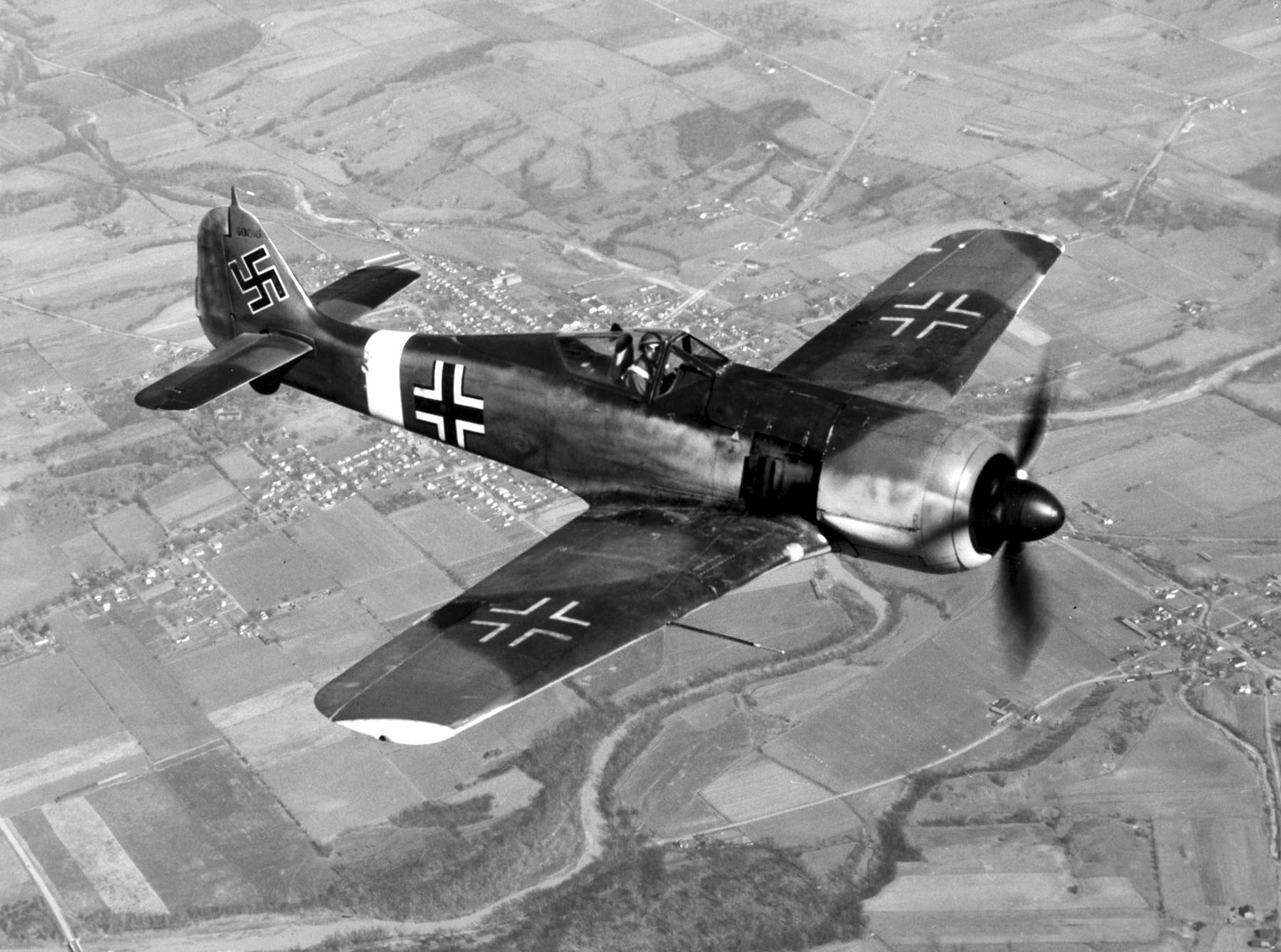
Focke wulf FW 190
| Role | Fighter |
|---|---|
| Manufacturer | Primarily Focke-Wulf Flugzeugbau AG, but also Ago, Arado, Fieseler, Mimetall, Norddeutsche Dornier and others |
| Designed by | Kurt Tank |
| First flight | 1 June 1939 |
| Introduced | August 1941 |
| Retired | 1945 (Luftwaffe); 1949 (Turkey) |
| Primary users | Luftwaffe Hungarian Air Force Turkish Air Force Romanian Air Force |
| Produced | 1941–45; 1996: 16 reproductions |
| Number built | Over 20,000 |
| Variants | Ta 152 |

Heinkel HE 111
| Role | Medium bomber |
|---|---|
| Manufacturer | Heinkel Flugzeugwerke |
| Designed by | Siegfried and Walter Günter |
| First flight | 24 February 1935 |
| Introduced | 1935 |
| Retired | 1945 (Luftwaffe) 1958 (Spain)[1] |
| Primary user | Luftwaffe |
| Produced | 1935–44 |
| Number built | 32 prototype aircraft 12 civilian airliners 808 pre war aircraft 5,656 aircraft (1939–45) Total: 6,508.[2] |
| Variants | CASA 2.111 |

Junkers JU 52
| Role | Transport aircraft |
|---|---|
| Manufacturer | Junkers |
| Designed by | Ernst Zindel |
| First flight | 13 October 1930 (Ju 52/1m); 7 March 1932 (Ju 52/3m) |
| Primary user | Luftwaffe |
| Produced | 1931–1945 (Germany) 1945–1947 (France) 1945–1952 (Spain) |
| Number built | 4,845 |

Junkers JU 87D
| Role | Dive bomber |
|---|---|
| Manufacturer | Junkers |
| Designed by | Hermann Pohlmann |
| First flight | 17 September 1935 |
| Introduction | 1936 |
| Retired | 1945 (Luftwaffe) |
| Primary users | Luftwaffe Regia Aeronautica Royal Romanian Air Force Bulgarian Air Force |
| Number built | Estimated 6,500 |

Junkers JU 88
| Role | Dive bomber/Tactical bomber/Night fighter/Torpedo bomber/Heavy fighter |
|---|---|
| Manufacturer | Junkers |
| Designed by | W. H. Evers and Alfred Gassner |
| First flight | 21 December 1936 |
| Introduced | 1939 |
| Retired | 1951 (France) |
| Primary user | Luftwaffe |
| Number built | circa 15,000 |
| Variants | Junkers Ju 188 |

Messerschmitt BF 109
| Role | Fighter |
|---|---|
| Manufacturer | Bayerische Flugzeugwerke Messerschmitt |
| Designed by | Willy Messerschmitt, Robert Lusser |
| First flight | 29 May 1935 |
| Introduced | 1937 |
| Retired | 1945, Luftwaffe 1965, Spanish Air Force |
| Primary users | Luftwaffe Hungarian Air Force Aeronautica Nazionale Repubblicana Forţele Aeriene Regale ale României |
| Number built | 33,984[1] |
| Unit cost | 42,900 RM (G-6, Erla-Werke, 1943) |
| Variants | Avia S-99/S-199 Hispano Aviacion Ha 1112 |
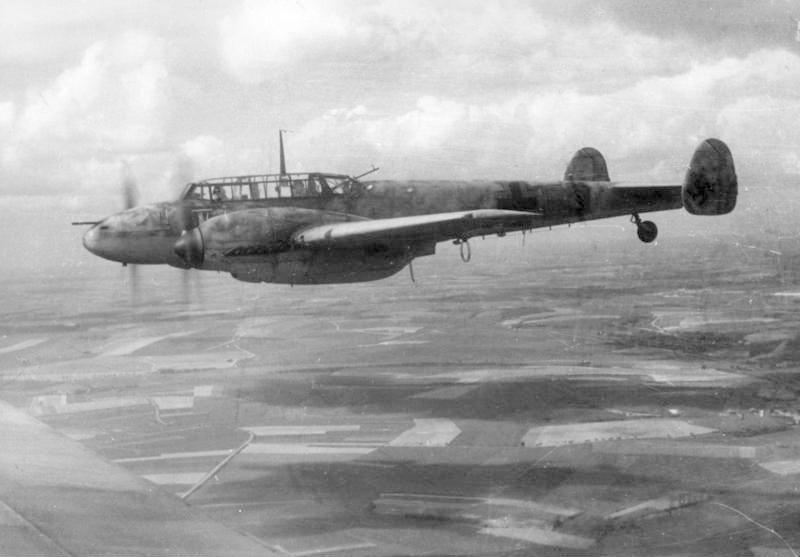
Messerschmitt BF 110
| Role | Heavy fighter/Ground-attack aircraft/Fighter-bomber/Night fighter |
|---|---|
| Manufacturer | Bayerische Flugzeugwerke Messerschmitt |
| Designed by | Willy Messerschmitt |
| First flight | 12 May 1936 |
| Introduced | 1937 |
| Retired | 1945 (Luftwaffe) |
| Primary users | Luftwaffe Hungarian Air Force Regia Aeronautica Romanian Air Force |
| Number built | 6,170 [1 |

Messerschmitt ME 262
| Role | Fighter aircraft |
|---|---|
| Manufacturer | Messerschmitt |
| First flight | 18 April 1941 with piston engine 18 July 1942 with jet engines[1] |
| Introduction | April 1944[2][3] |
| Retired | 1945, Germany 1951, Czechoslovakia[4] |
| Primary users | Luftwaffe Czechoslovak Air Force (S-92) |
| Number built | 1,430 |
No comments:
Post a Comment